Using contextual research to uncover the emotions, sensory cues, and experiences behind an ideal ice cream experience.
Context
Developed as part of the SCAD-Lextant Certification program in Methods of Contextual Research, this 10-week team project introduced experience-centered research methodologies through a collaboration between SCAD and Lextant. Working as part of a four-person research team, we explored how a seemingly simple dessert can evoke meaningful emotional responses and what defines an ideal ice cream experience.
What we noticed
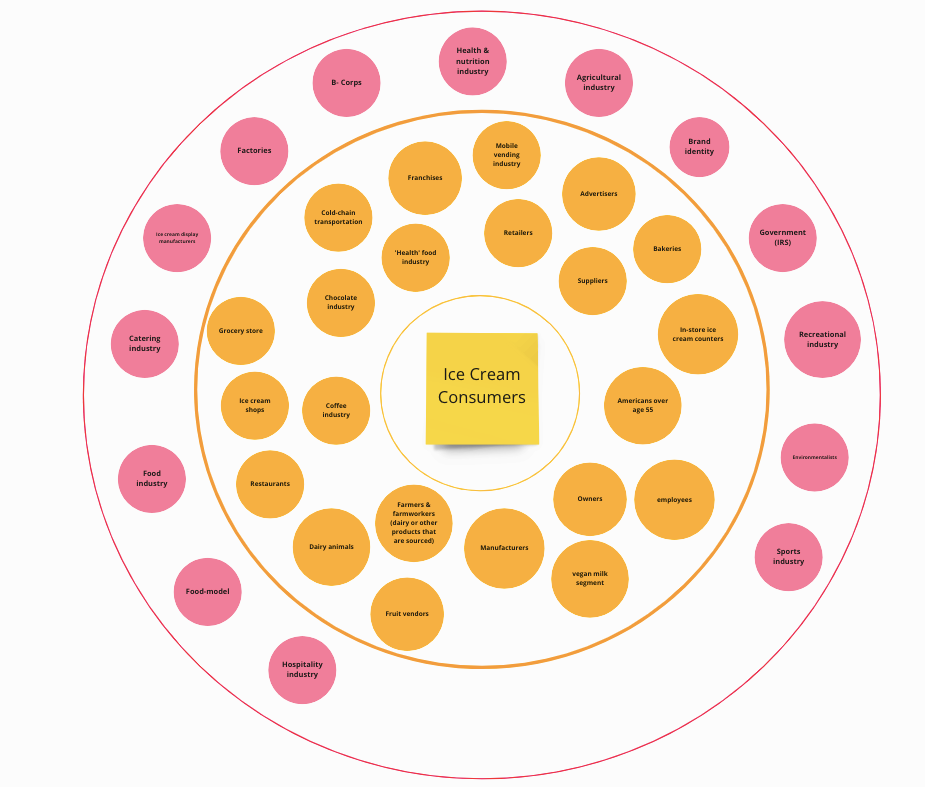
Ice cream was rarely about the ice cream itself. Through early research and stakeholder mapping, we found that people associated it with celebration, comfort, connection, and nostalgia. We became curious about the emotions people were truly seeking through the experience.
What we explored
Using surveys, interviews, cultural probes, and sensory cue workshops, we gathered more than 1,000 data points from participants with diverse backgrounds and food preferences. We explored the emotions, aspirations, and sensory cues that shaped people’s ideal ice cream experience.



What took shape
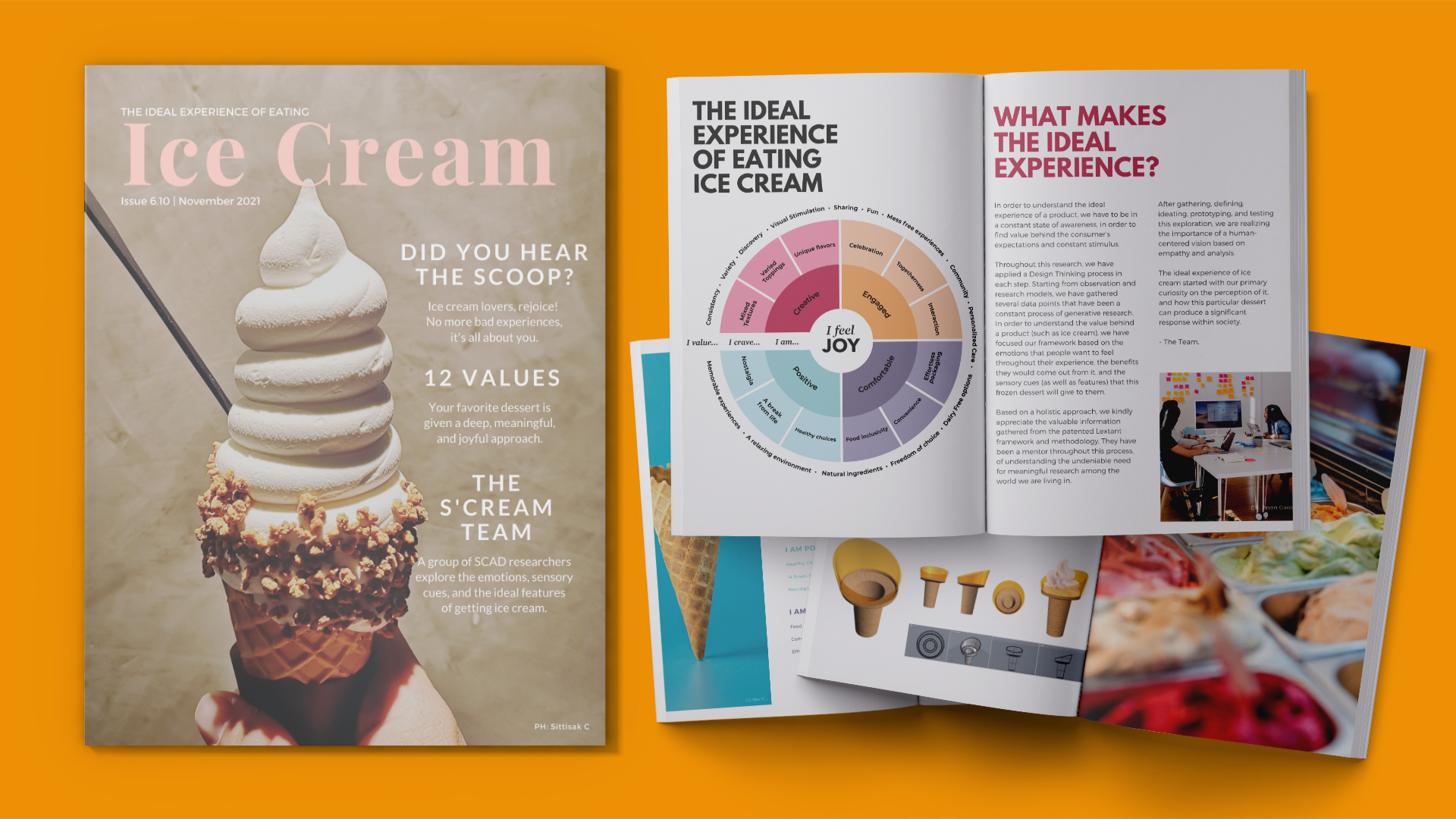
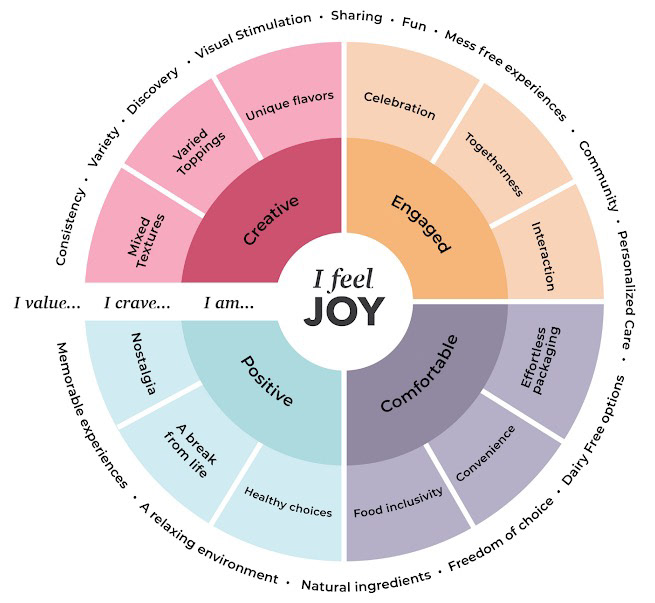
A research framework centered around joy that connected desired emotions, benefits, and sensory cues. Four themes emerged—engaged, positive, comfortable, and creative—which we translated into a magazine-style publication and a series of design opportunities, including a packaging concept designed to reduce mess and enhance the overall experience.
What I learned
Human experiences are often more complex than they first appear. This project taught me how to move beyond surface-level observations to uncover the emotions, motivations, and relationships that shape behavior—and how to translate those insights into frameworks that others can understand and act upon.
My role
Researcher within a four-person team. Contributed to participant recruitment, interviews, workshops, affinity mapping, insight synthesis, framework development, and the creation of the final research publication.