A speculative experience concept that reimagined Play-Doh’s sustainability communication through an interactive museum designed to inform, engage, and inspire more responsible consumer behavior.
What we noticed
Play-Doh is deeply associated with creativity, childhood, color, and play, but our research showed that sustainability was not part of how most consumers understood or engaged with the brand.
What we explored
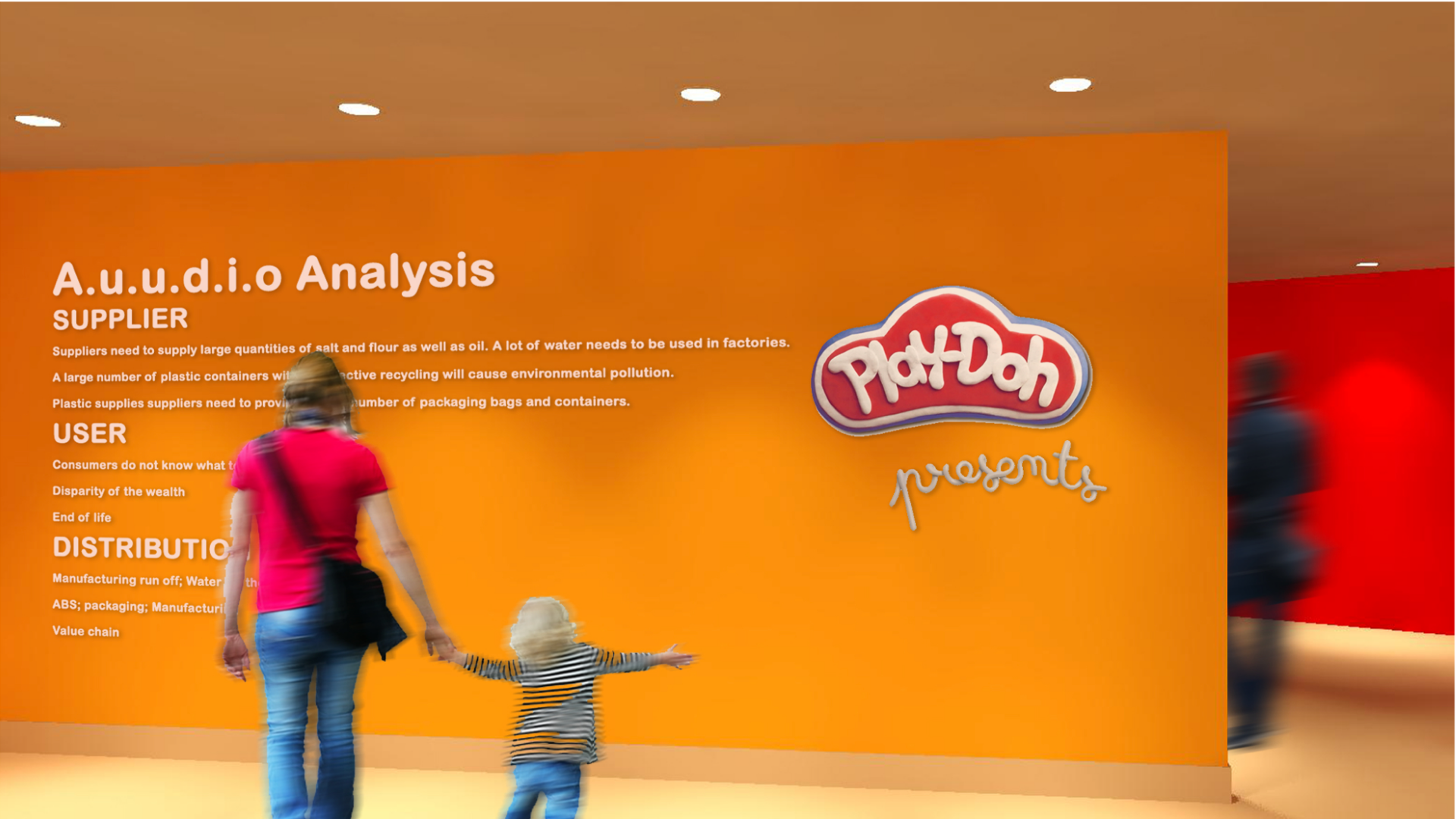
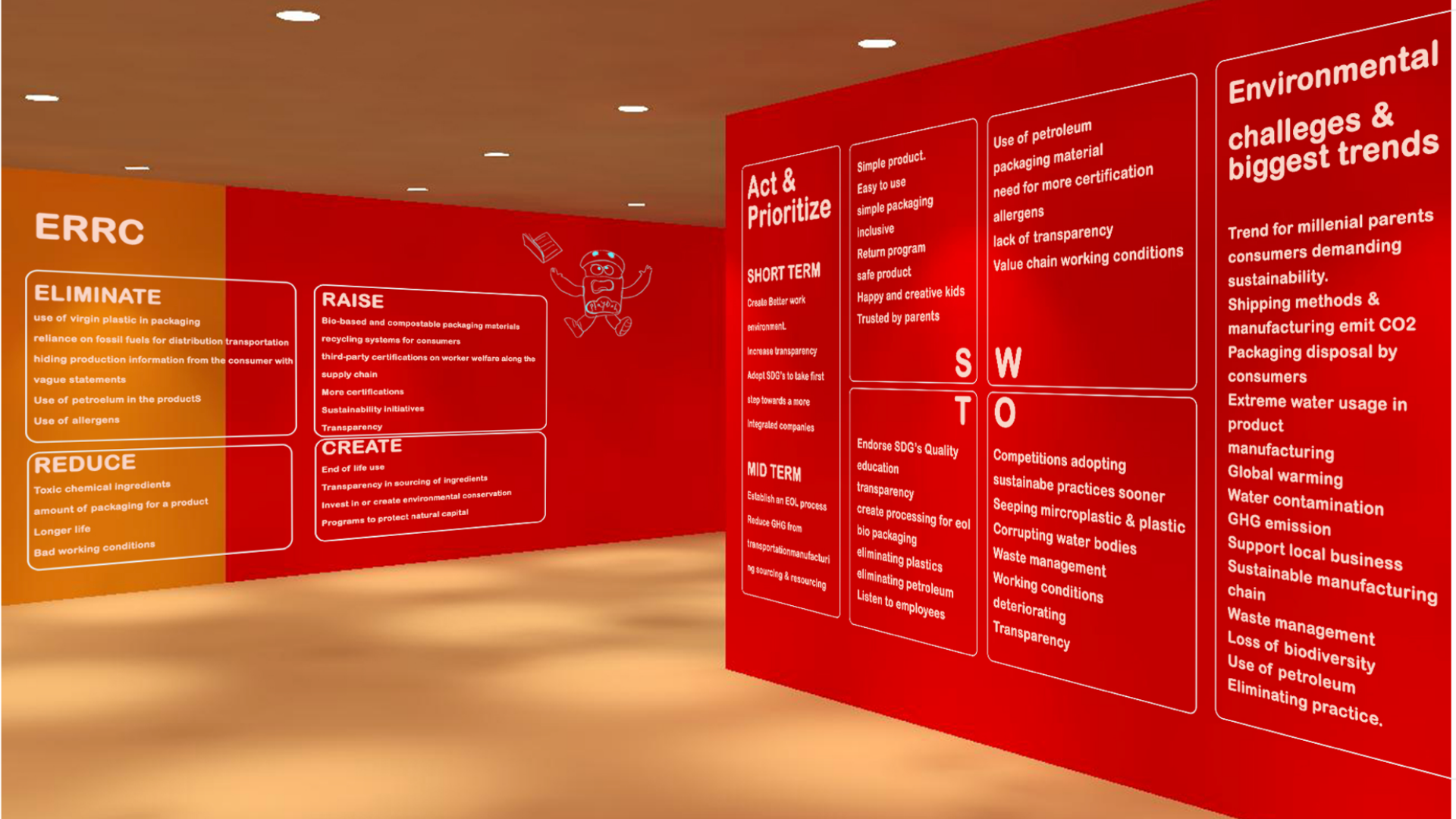
Through secondary research, surveys, interviews, focus groups, competitor analysis, stakeholder mapping, service blueprinting, A.U.U.D.I.O. analysis, SWOT analysis, and strategy mapping, we studied consumer behavior, buying preferences, sustainability awareness, and opportunities for behavior change within the toy industry.
What took shape
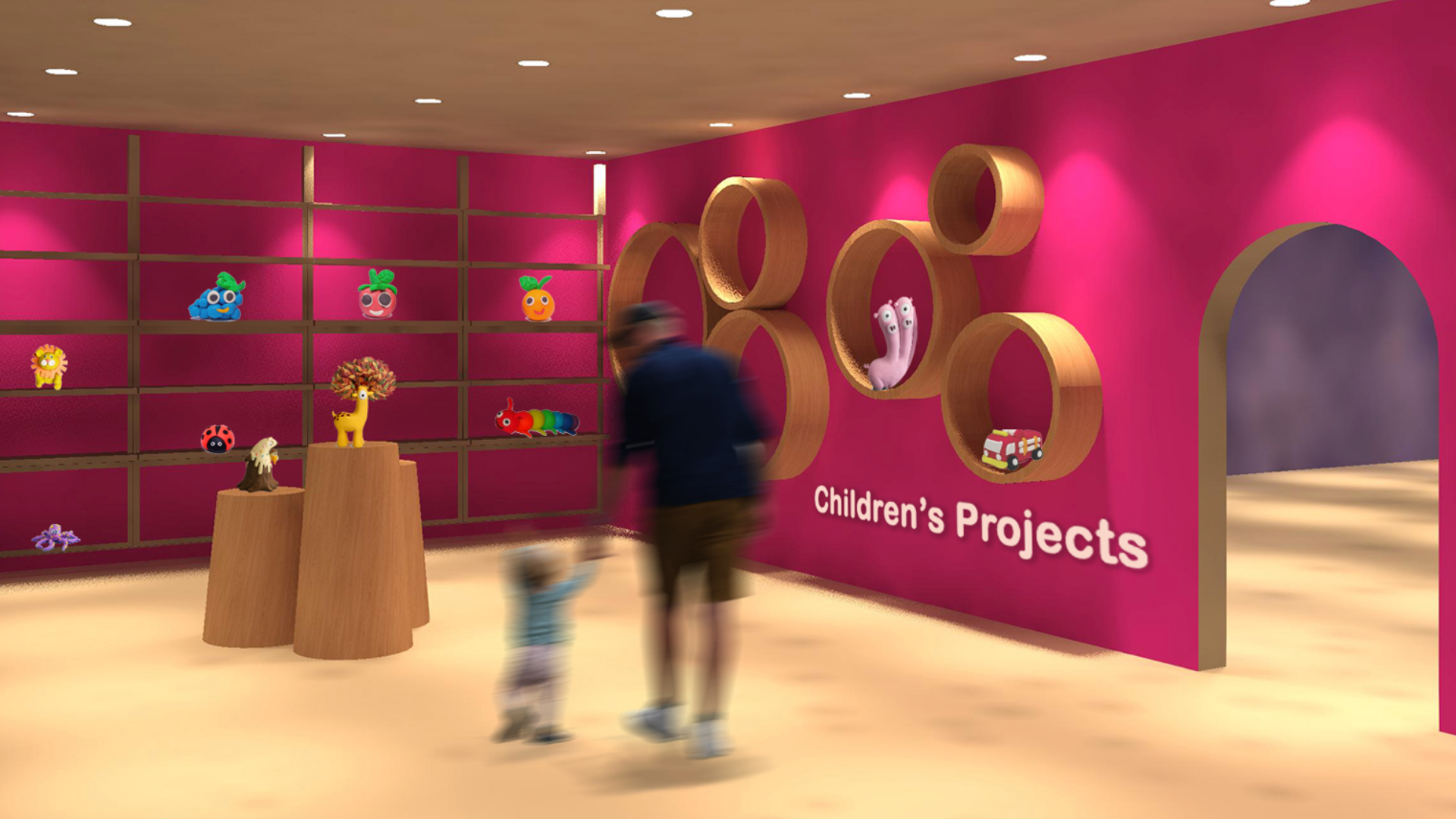
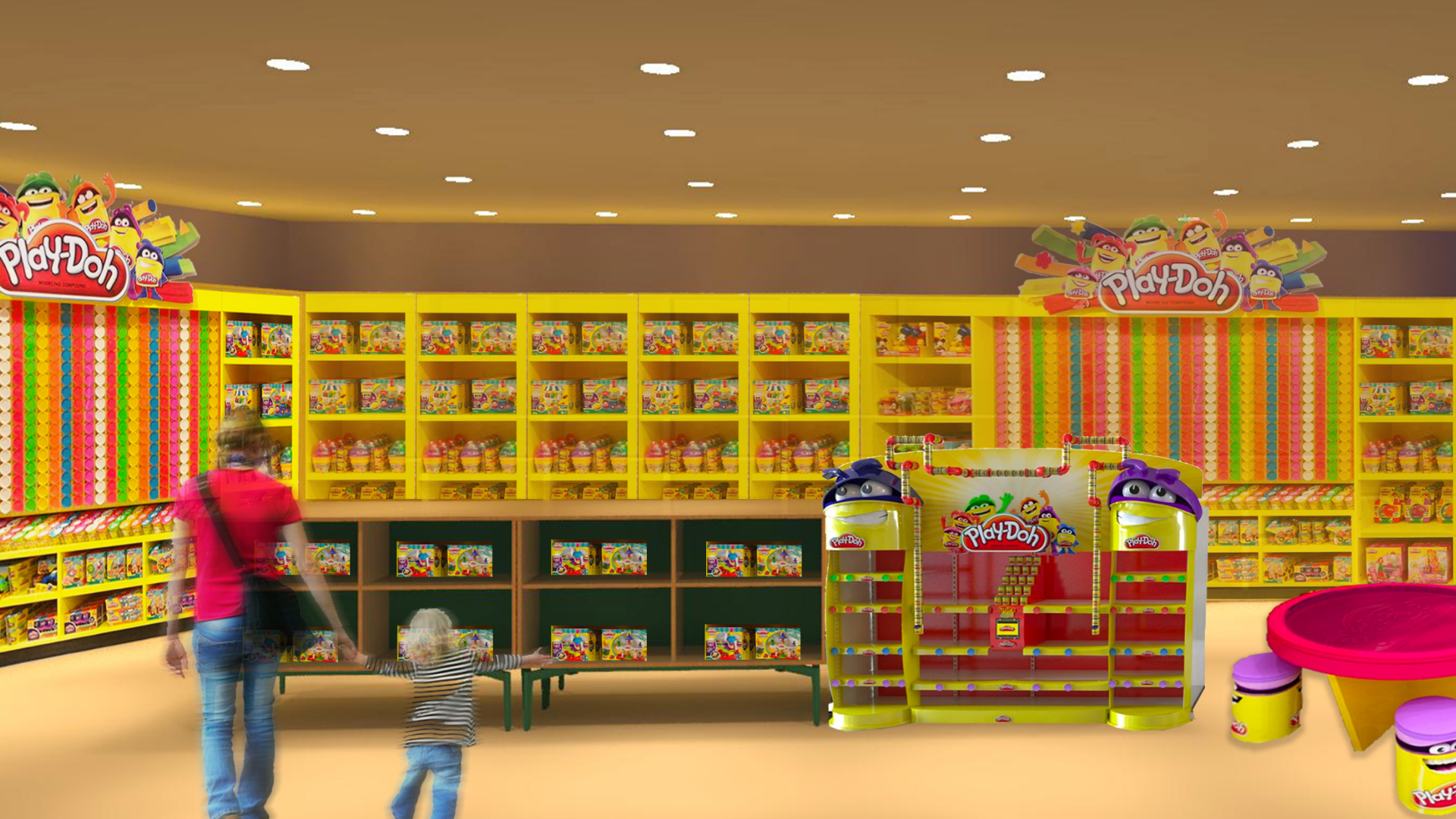
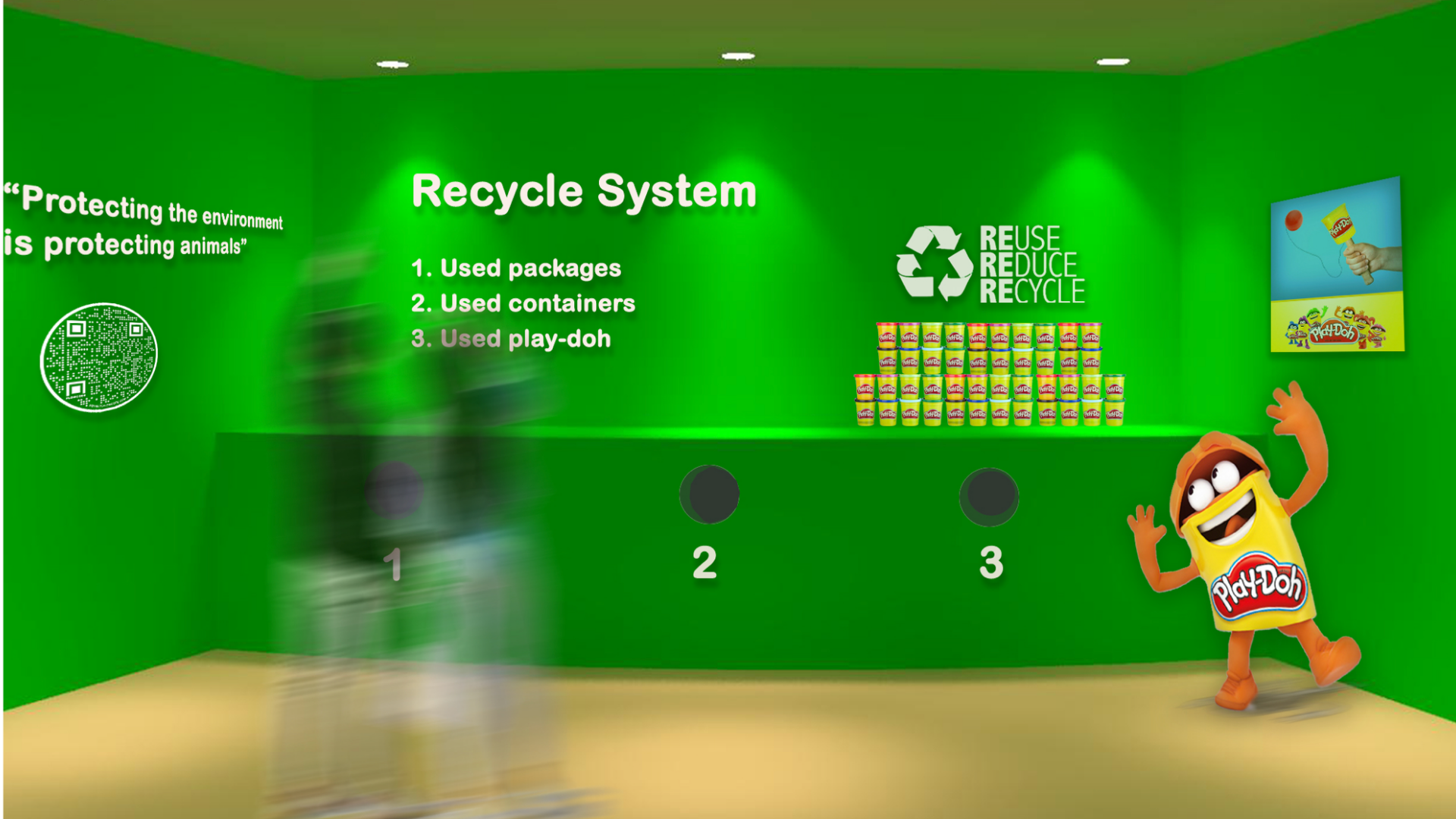
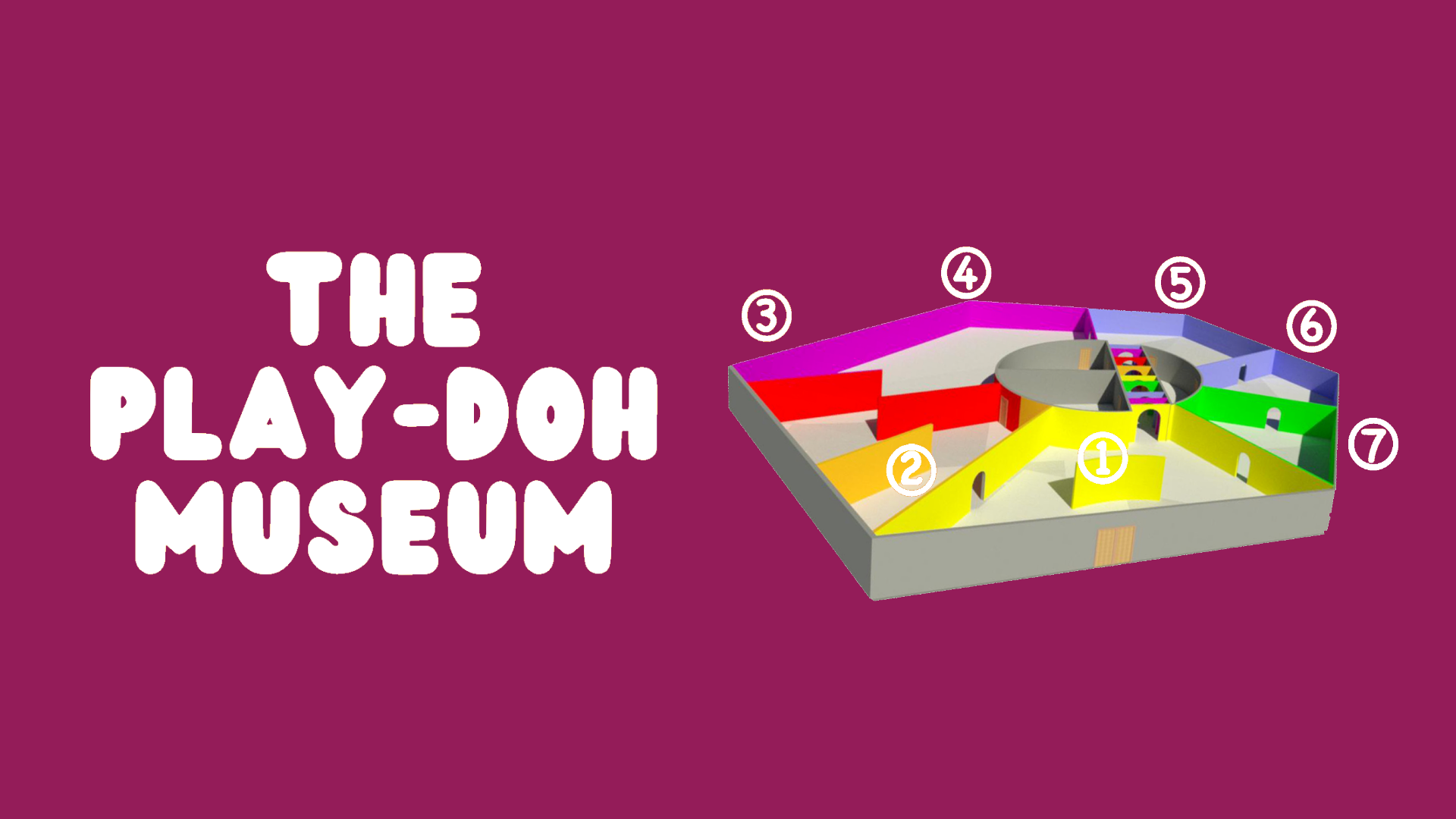
We developed The Play-Doh Museum, a closed-loop experiential concept where each room translates a sustainability gap into an interactive learning moment — helping users understand the impact of toys, disposal, reuse, and more responsible choices.
What I learned
Behavior change is more likely when information feels tangible, engaging, and easy to act on. For a playful brand like Play-Doh, sustainability communication can be most effective when it feels just as imaginative as the product itself.
My role
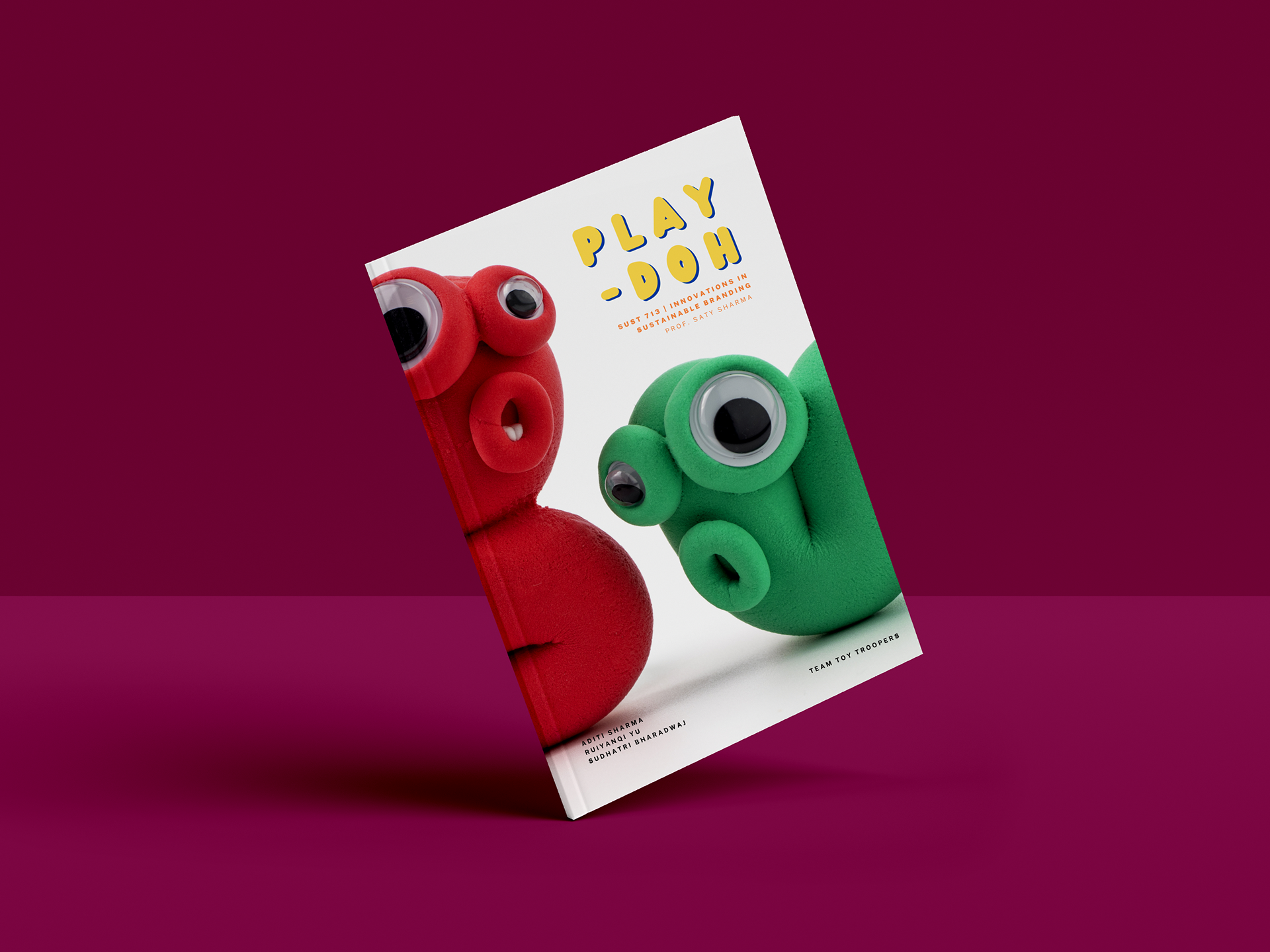
I contributed to qualitative and quantitative research, helped identify user needs and behavior patterns, and conceptualized the client magazine that brought together our research, insights, and final strategy,