Inspired by the resurrection fern, this biomimicry project led to the design of PELTE, a concept for helping communities adapt to climate change.
What we noticed
As climate change accelerates, communities face increasing challenges related to food, water, and energy security. Many of the systems we rely on are efficient but often struggle to adapt when disrupted.
What we explored
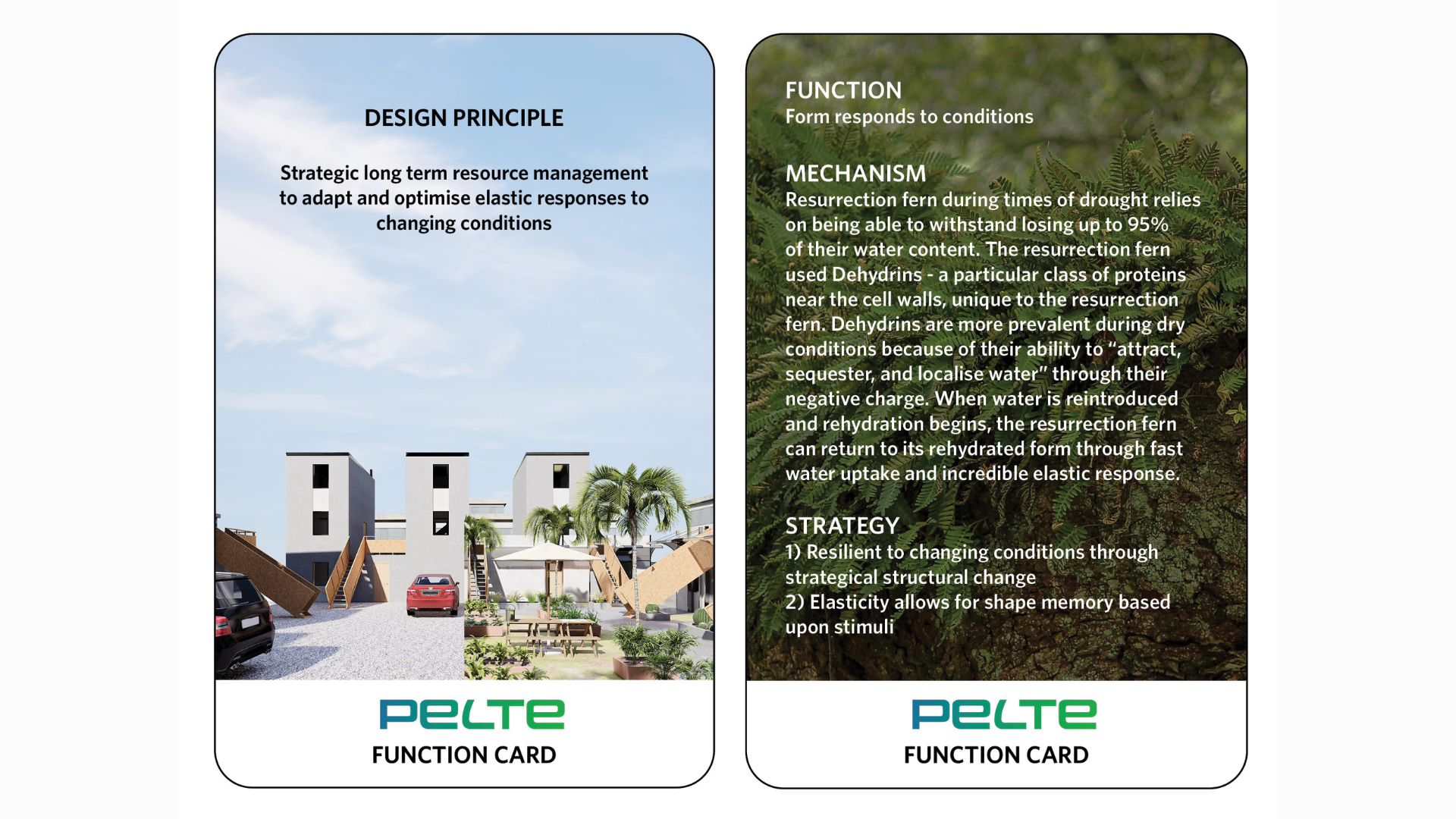
Using biomimicry as a lens, we studied the resurrection fern, a plant capable of surviving long periods of drought and springing back to life when conditions improve. We explored how its strategies for adaptation, resource management, and recovery could inform the design of human systems.
What took shape
PELTE, a design concept that applies lessons from the resurrection fern to food, water, and energy systems. Designed as an interconnected community model, it explores how neighborhoods can better prepare for, respond to, and recover from climate-related disruption.
What I learned
Resilience is not about resisting change. Nature thrives through adaptation, and the most resilient systems are often those that can flex, recover, and evolve over time.