Using Rubik’s Cube as a visual metaphor to explore sustainability, systems thinking, and the hidden interconnections shaping complex challenges.
What I noticed
Sustainability is often spoken about in isolated parts — environment, economy, society — even though the real challenge lies in understanding how deeply interconnected these systems are. I began noticing how difficult it can be to make sense of sustainability when we only look at one piece at a time.
What I explored
Using the Rubik’s Cube as a visual metaphor, I explored sustainability through a systems thinking lens. Drawing from stories, research, books, designers, thinkers, and global perspectives, I examined how interconnected systems function, shift, and influence one another — and how visual storytelling can help make complex ideas easier to understand and engage with.
What took shape
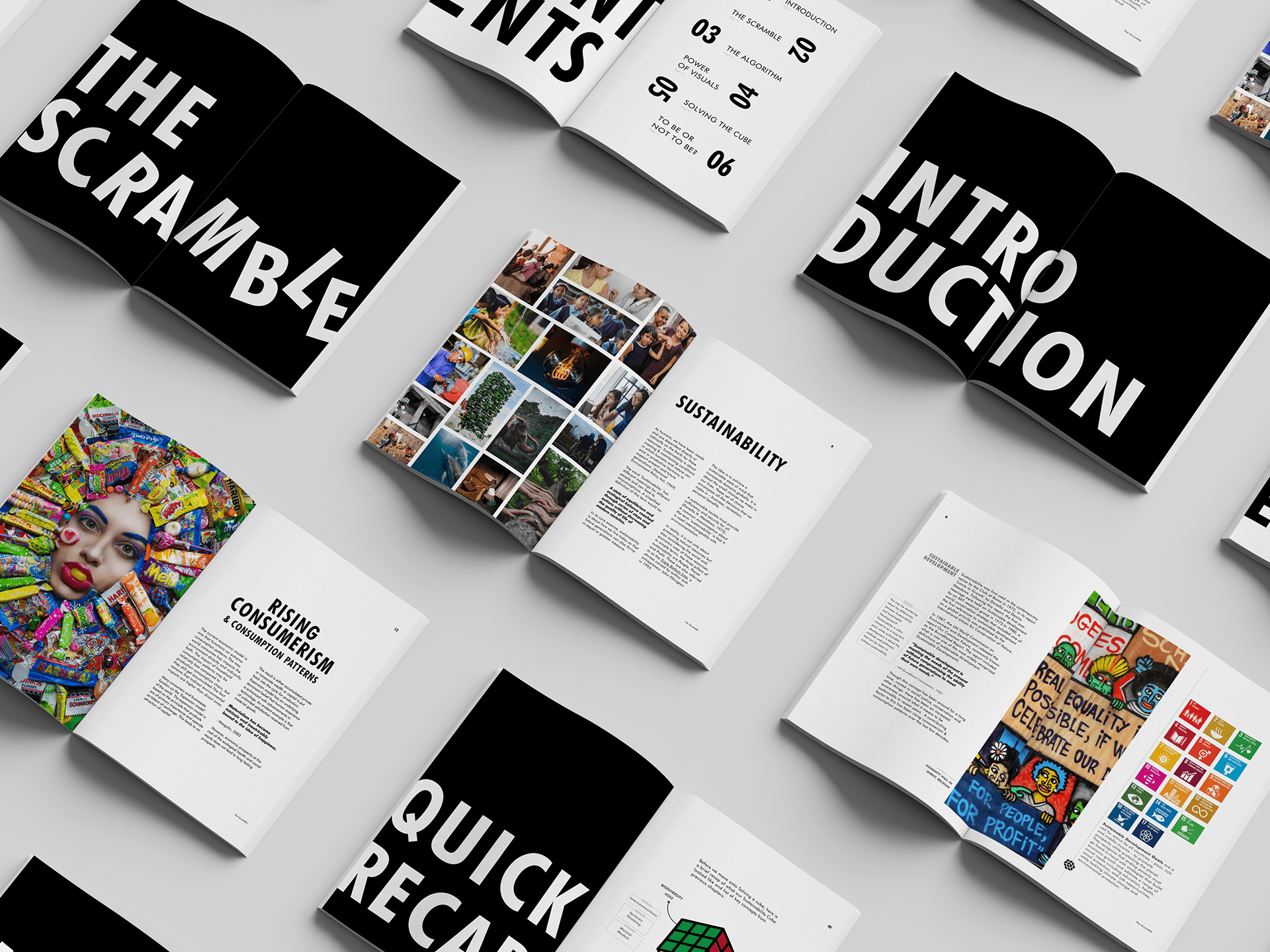
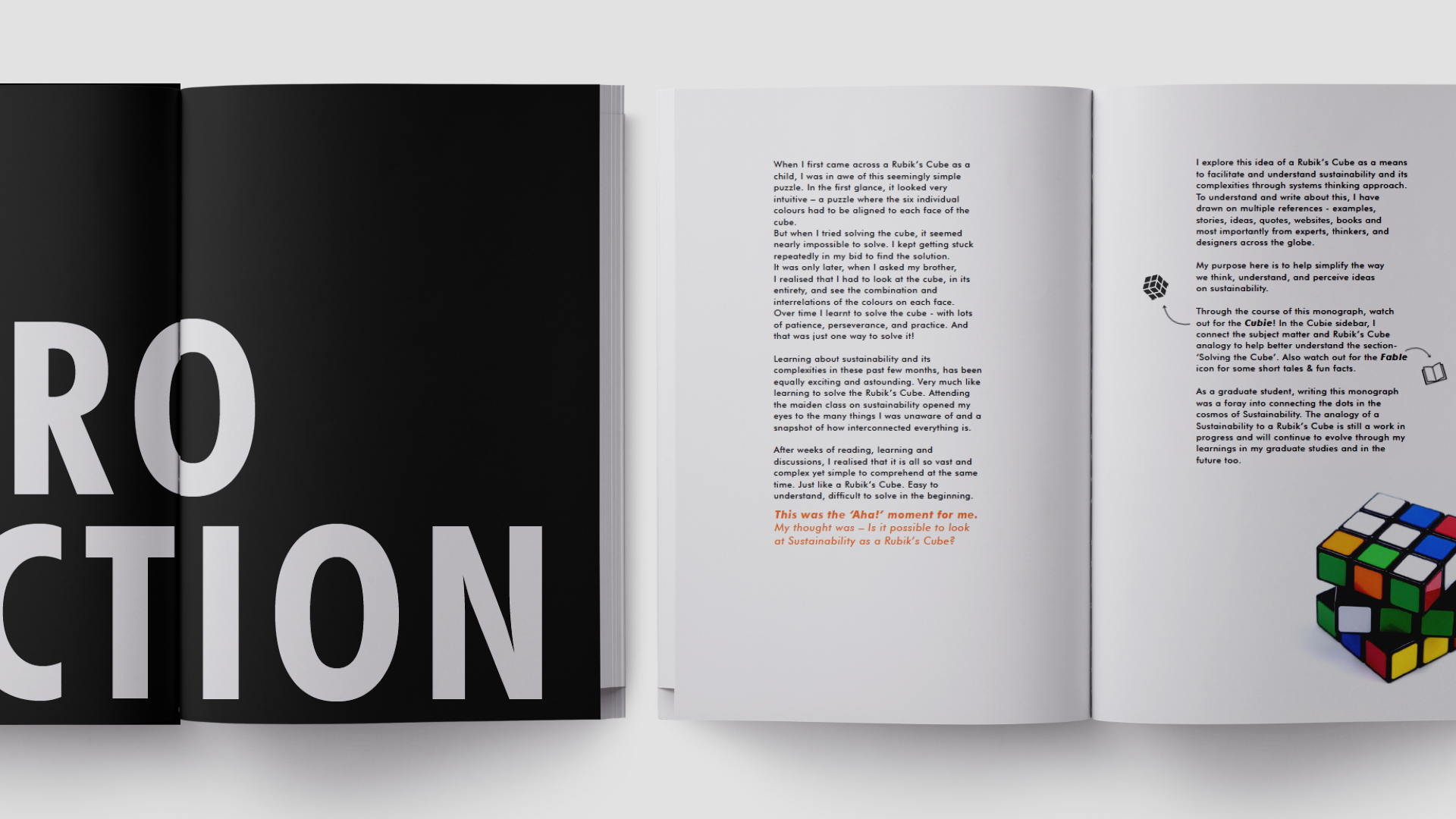
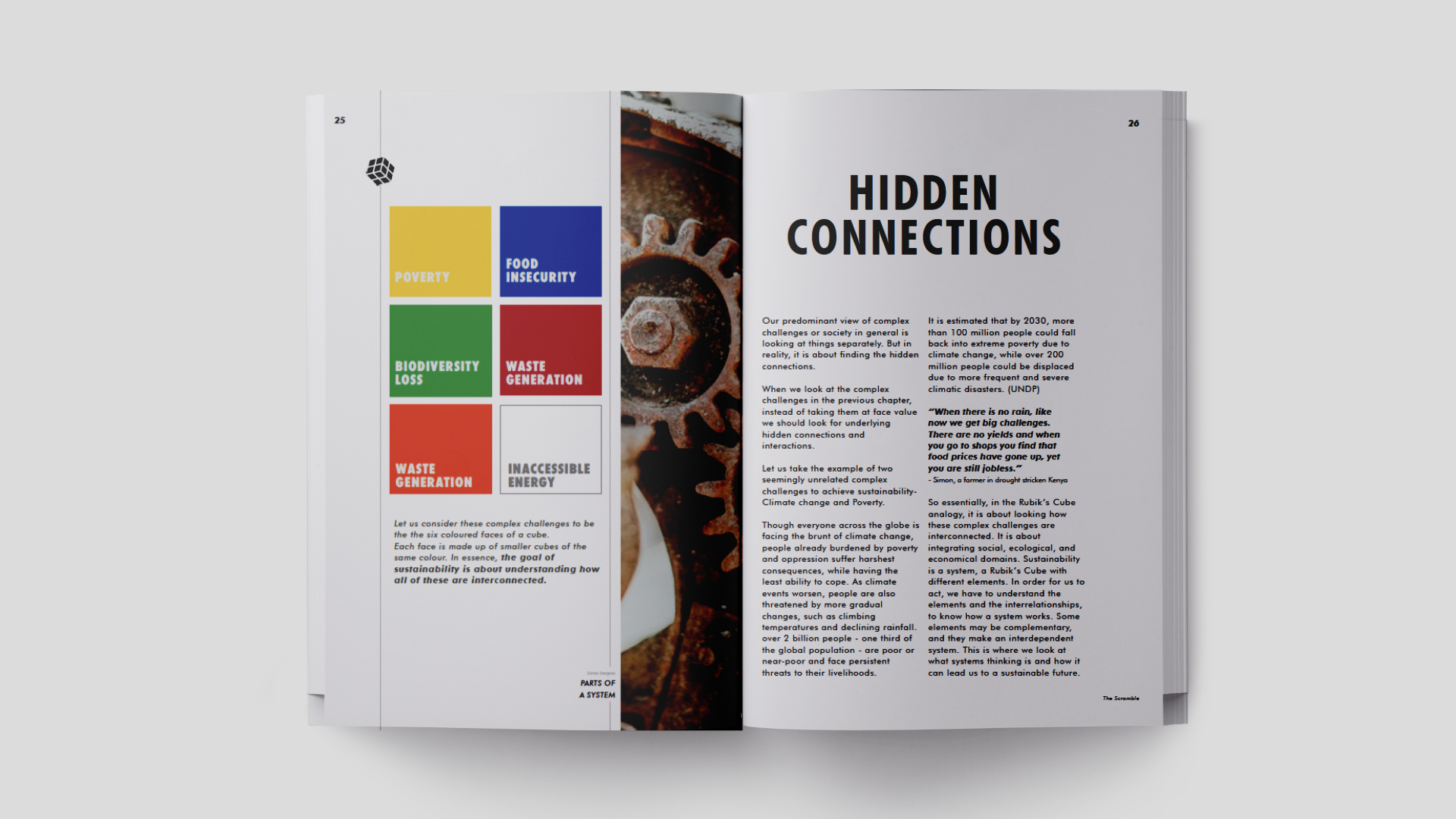
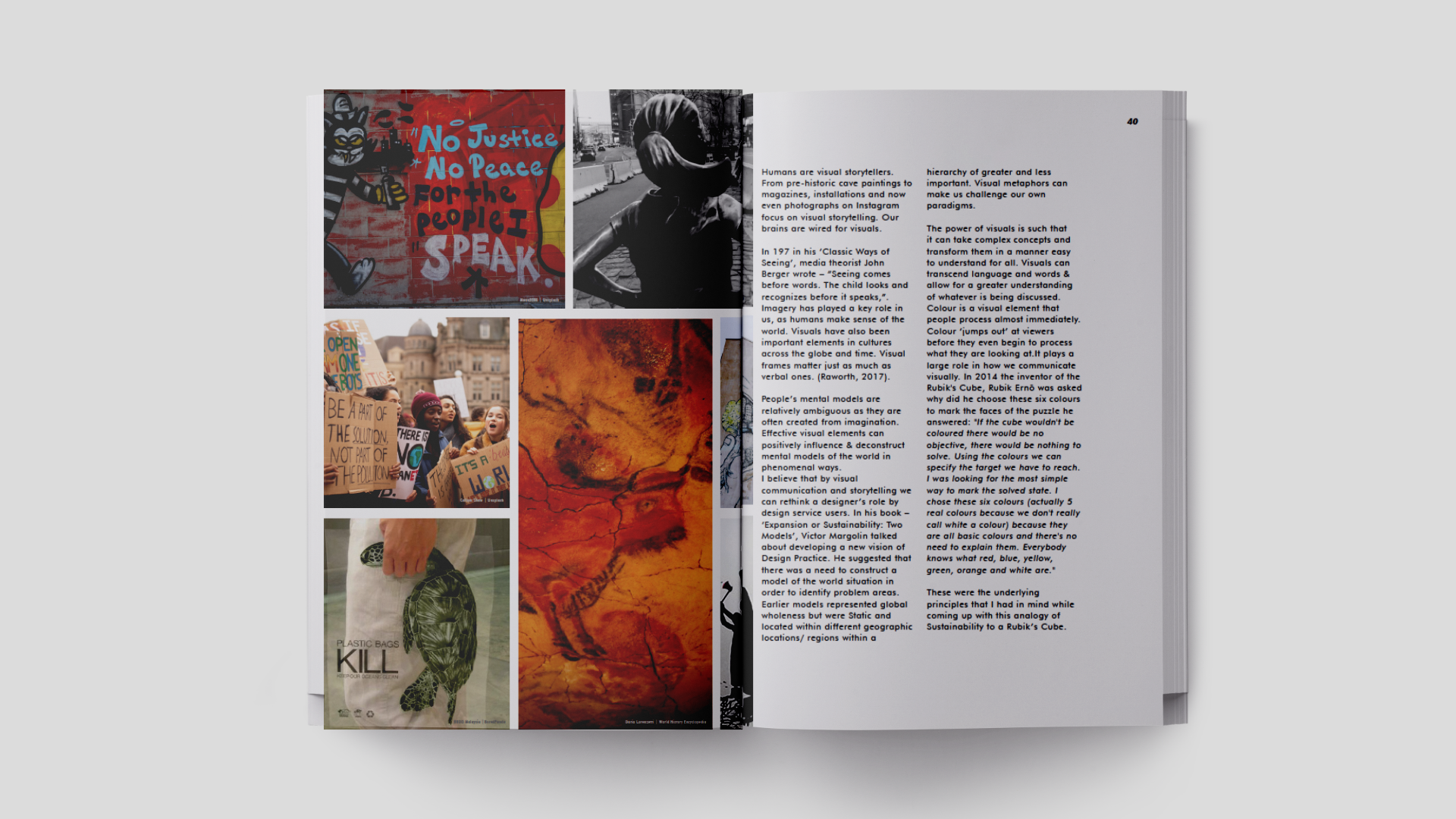
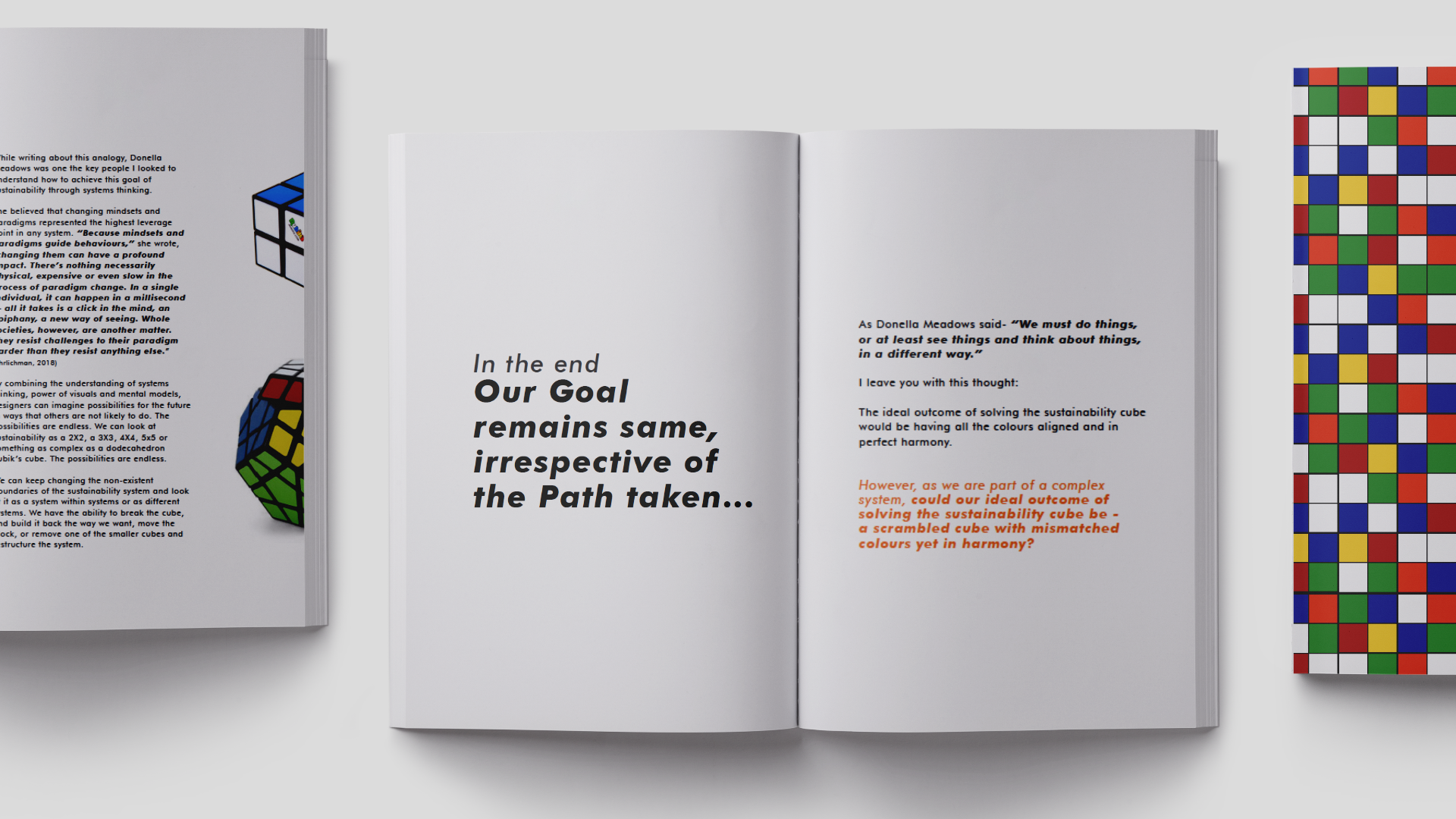
The project evolved into an experimental book that reframed sustainability as a dynamic, interconnected system rather than a fixed solution. Through visuals, reflections, and systems-based thinking, the book used the Rubik’s Cube analogy to simplify complexity, challenge dominant mental models, and invite readers to imagine more flexible, interconnected futures.
What I learned
Maybe sustainability is not about achieving a perfectly solved cube, but learning how seemingly mismatched pieces can still exist in balance and harmony within a constantly evolving system.
Curious to explore the full cube? Let’s connect.